- 1
All Kobe beef is wagyu, but only purebred Tajima cattle born, raised and slaughtered in Hyogo Prefecture earn the Kobe name.
- 2
Kobe beef does not have to be A5: it can grade A4, B4 or B5, so the A5 stamp alone proves nothing.
- 3
Book lunch, not dinner: the same certified beef costs roughly 20 to 50 percent less at midday.
In Japan, beef from crossbred cattle cannot legally be sold as Kobe beef. In some other countries, such as the United States, weak trademark rules let sellers market crossbred meat as "Kobe beef" or "Kobe-style beef". The certified thing exists only in Japan, where Tajima cattle from Hyogo Prefecture pass the official grading rules. So treat a "Kobe" label abroad as a style of wagyu and expect a different cut of meat behind it. If the real thing matters to you, book a meal at a registered restaurant in Kobe or on a certified Kobe beef tour.
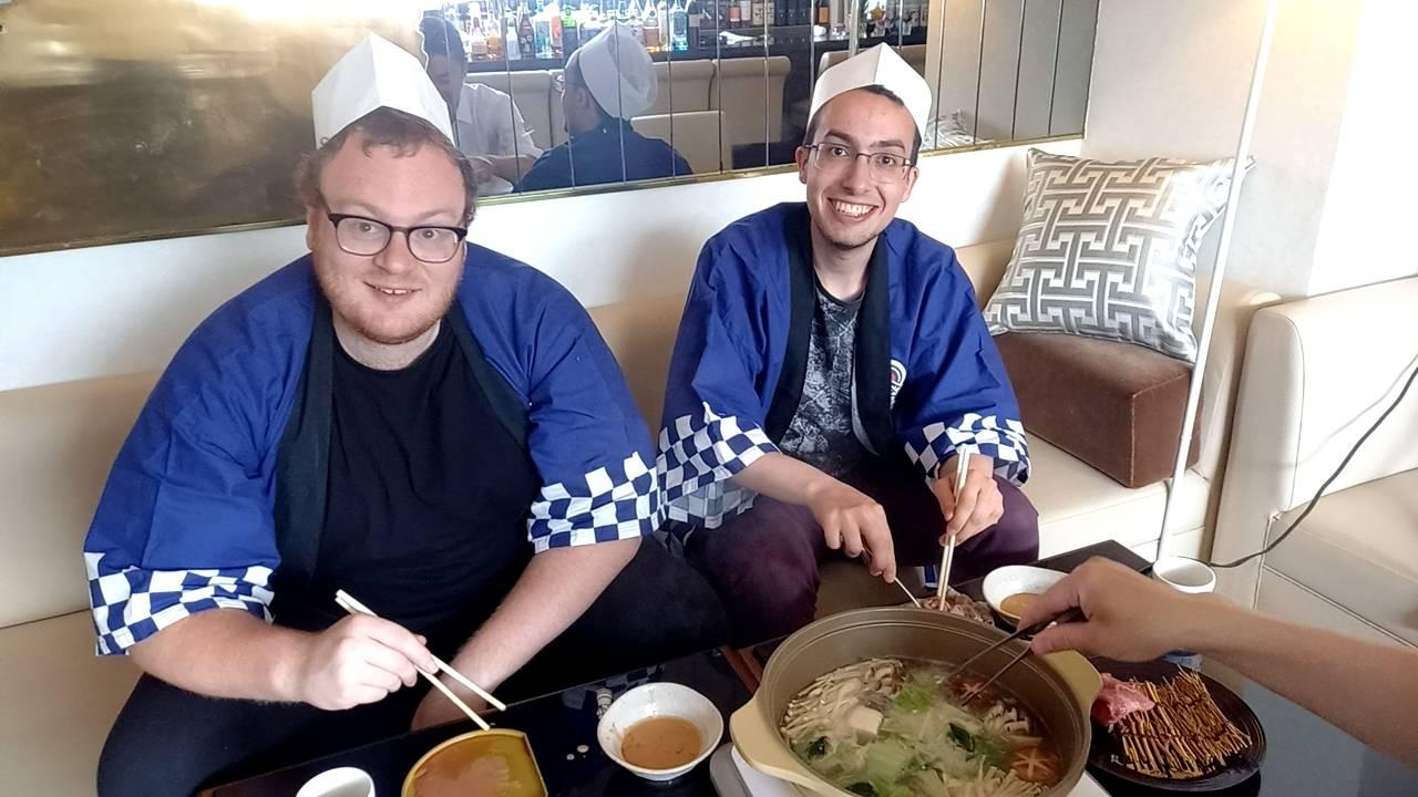
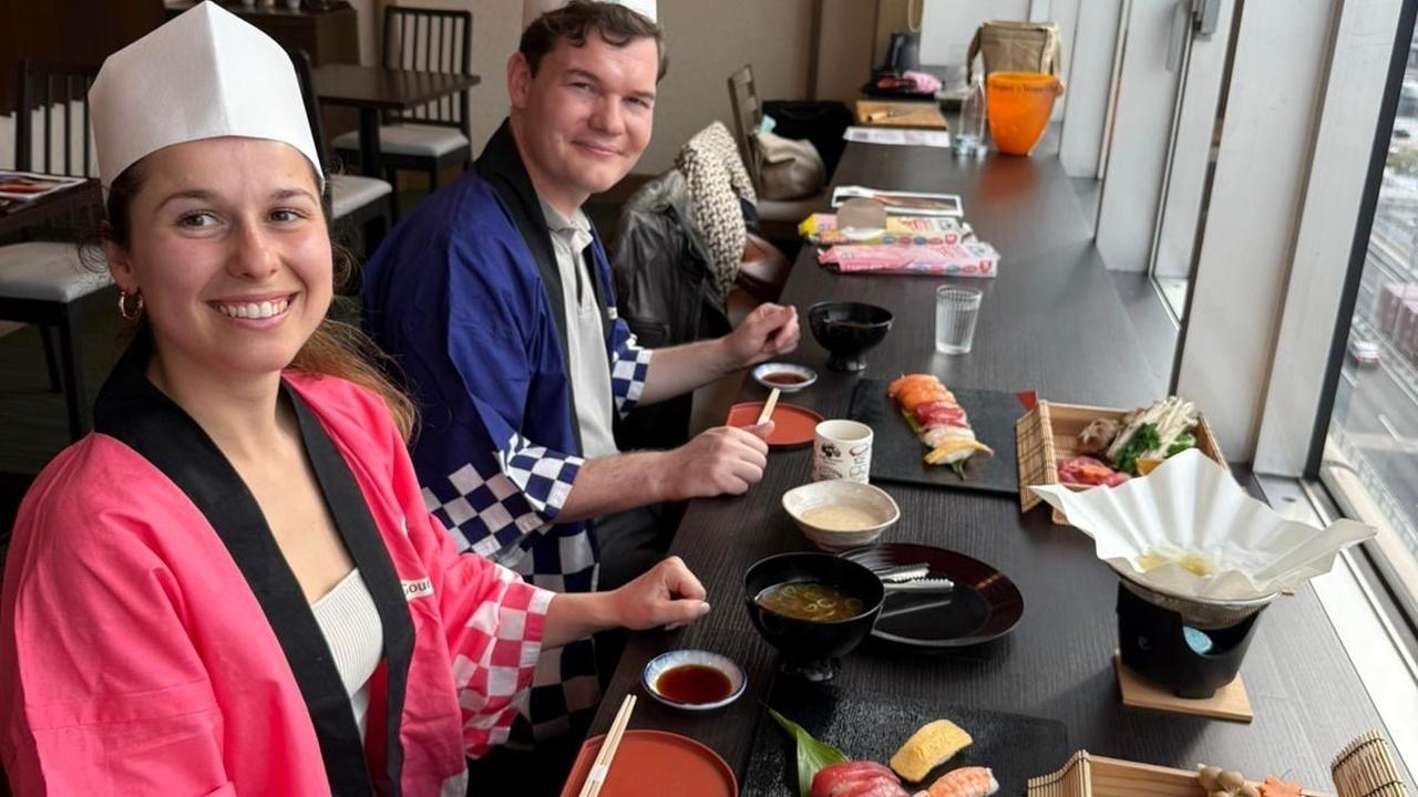
Photos of Kobe Beef and wagyu - same lineage on the plate
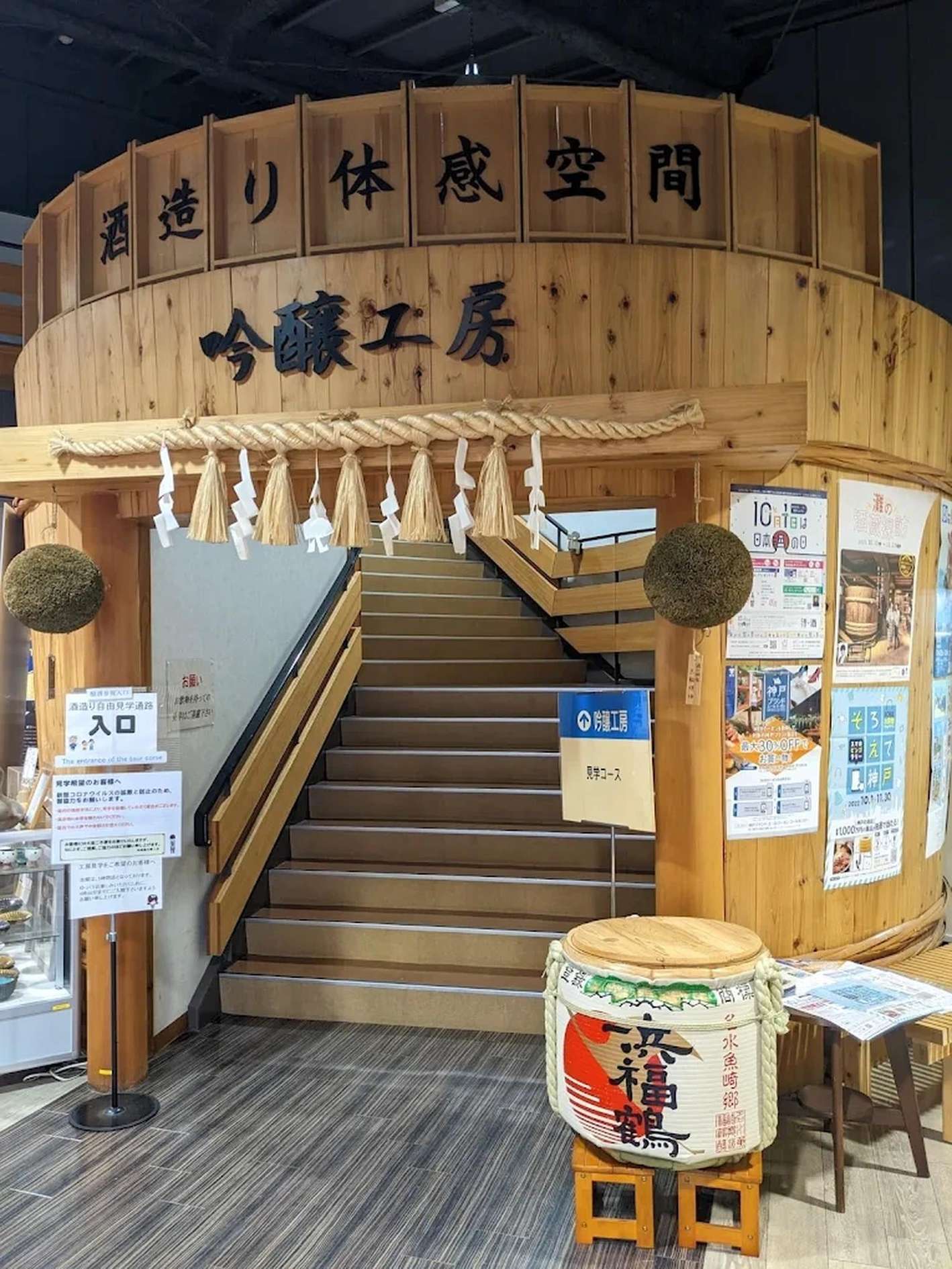
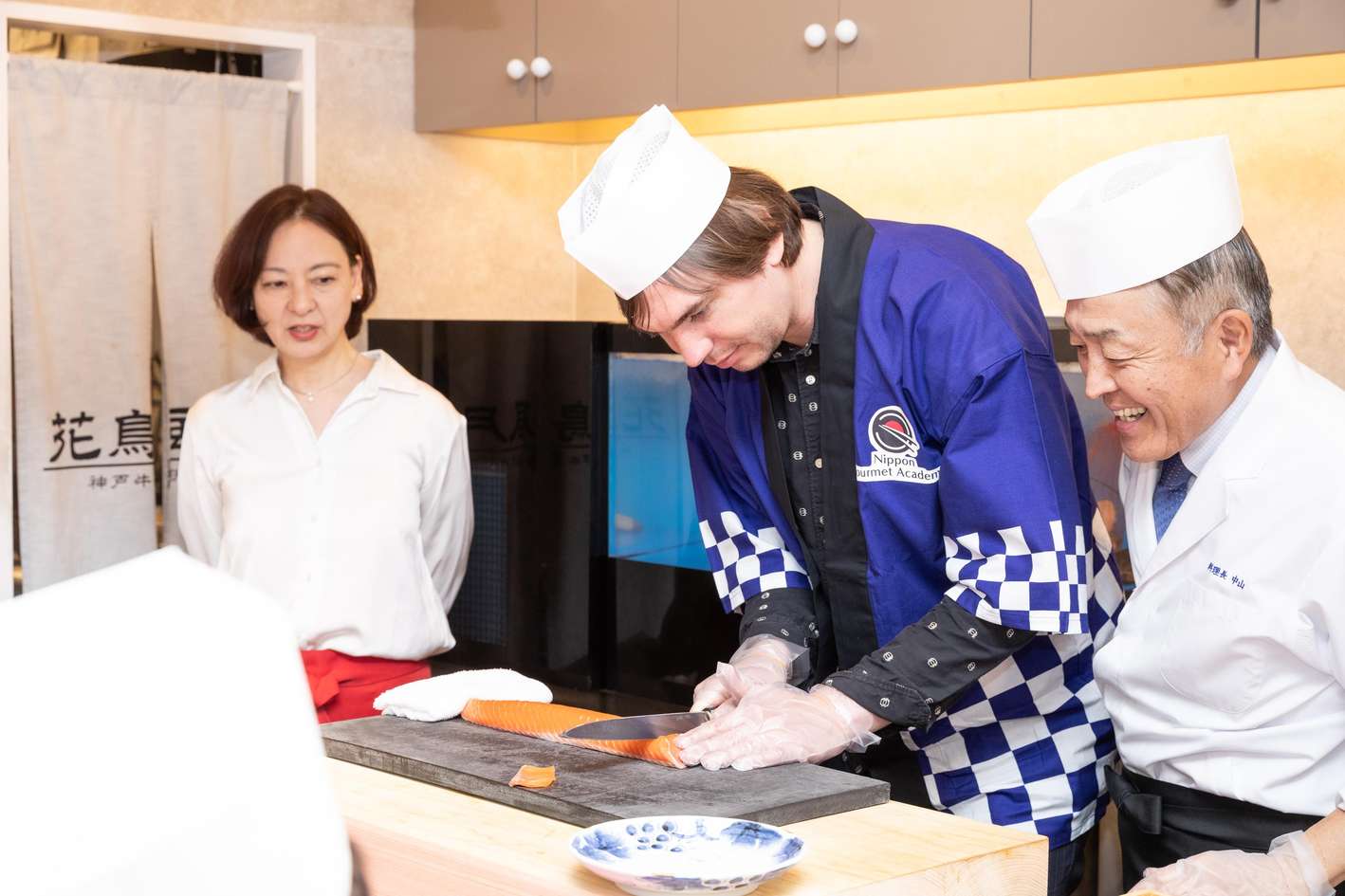
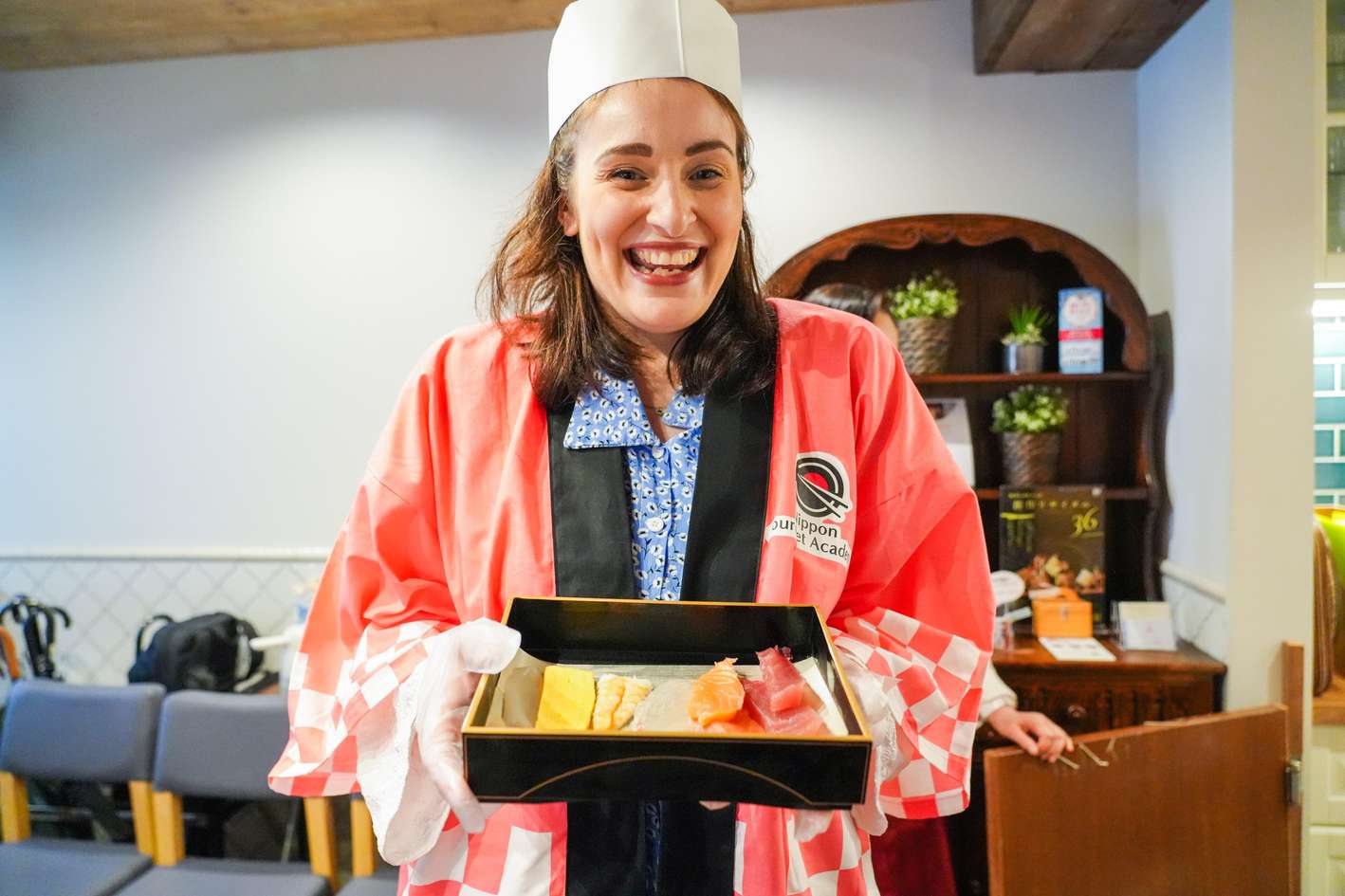
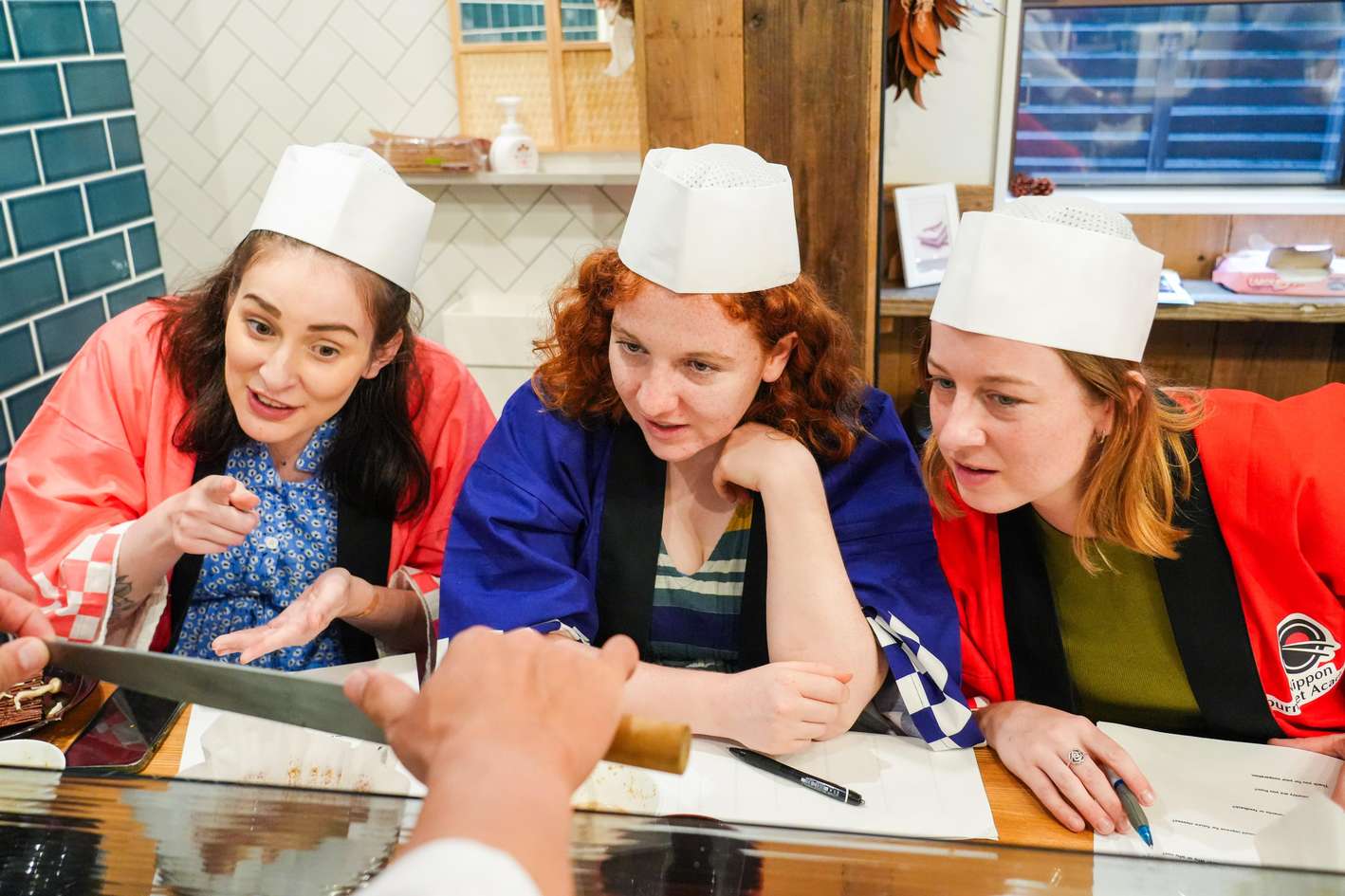
All Kobe beef is wagyu, but almost no wagyu is Kobe beef
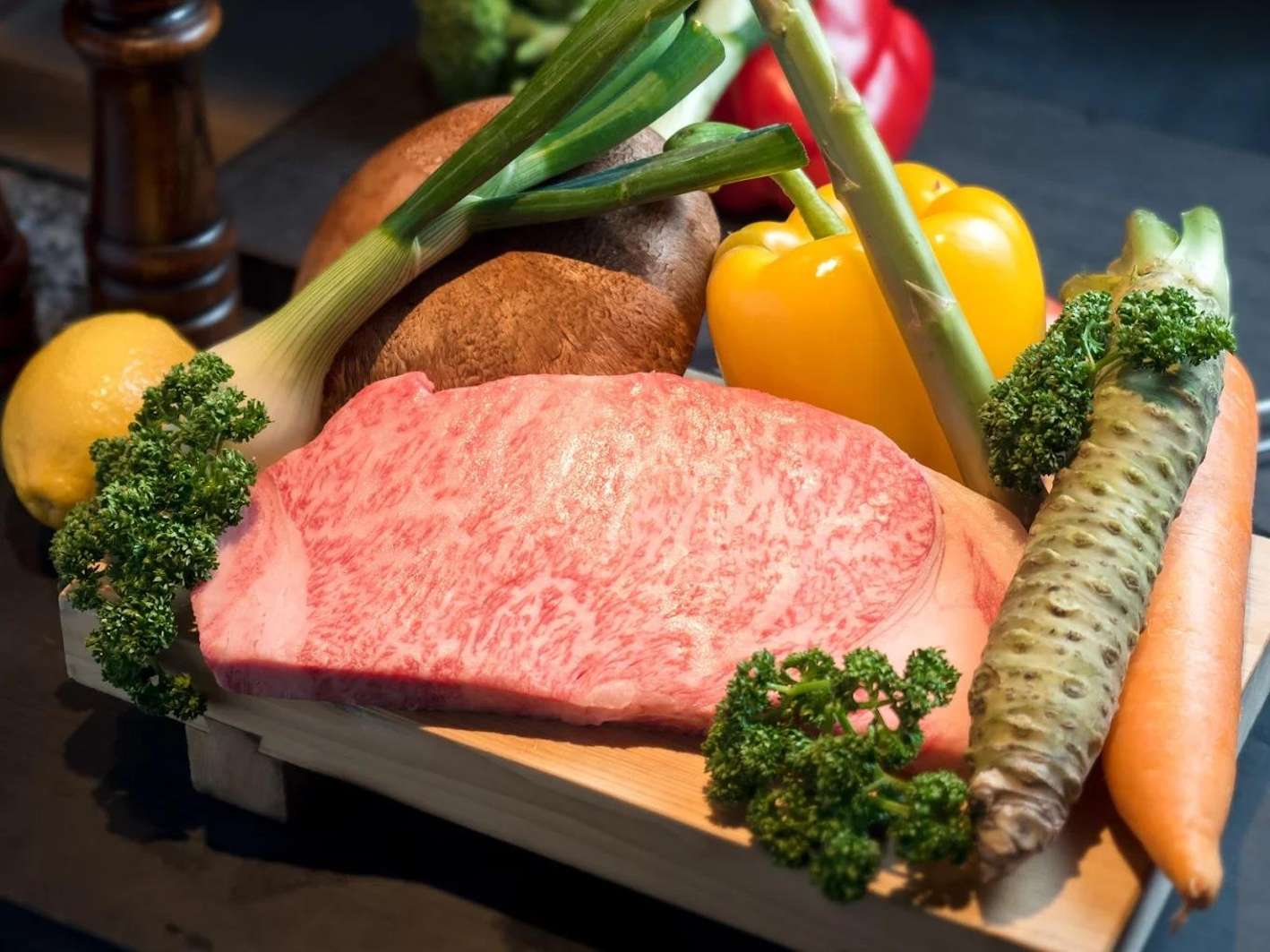
The waiter sets down a plate of pale pink steak, marbled so densely the knife leaves barely a mark in it. Somewhere between the first bite and the bill, the question arrives: is this the same beef as the wagyu back home, or something else? The answer is a family tree.
Wagyu is the umbrella word for Japanese cattle, four breeds in all, and it can be raised anywhere in the country.
Kobe beef is a legally protected tier of that family: meat from purebred Tajima cattle born, raised and slaughtered in Hyogo Prefecture, from a bloodline kept pure with prefecture-owned sires. It also has to clear quality bars most wagyu never faces.
Those bars are strict. A carcass needs a marbling score of at least 6, a meat quality grade of 4 or higher, a yield of A or B, and a weight between 270 and 499.9 kg depending on the animal. Crossbreeding with other prefectures' cattle ends the claim entirely.
What separates Kobe beef from general Wagyu
| General Wagyu | Certified Kobe beef | |
|---|---|---|
| Cattle lineage | Any of the four Japanese wagyu breeds, crossbreeding allowed | Purebred Tajima cattle only, with Hyogo-owned sires |
| Where it comes from | Anywhere in Japan | Born, raised and slaughtered in Hyogo Prefecture |
| Marbling requirement | BMS 8 or higher for an A5 label | BMS 6 or higher, quality grade 4 or above |
| Status | A breed and a grade, no protected place name | A legally protected designation with an official seal |
- Cattle lineage
- Any of the four Japanese wagyu breeds, crossbreeding allowed
- Where it comes from
- Anywhere in Japan
- Marbling requirement
- BMS 8 or higher for an A5 label
- Status
- A breed and a grade, no protected place name
- Cattle lineage
- Purebred Tajima cattle only, with Hyogo-owned sires
- Where it comes from
- Born, raised and slaughtered in Hyogo Prefecture
- Marbling requirement
- BMS 6 or higher, quality grade 4 or above
- Status
- A legally protected designation with an official seal
So the word wagyu on a menu tells you the breed and nothing about quality. The Kobe name tells you the pedigree and the place.
What A5 actually means on a Japanese menu
A counter seat in Sannomiya, the menu open, and there it is: A5. Most travelers read that as a guarantee of Kobe beef. It is not.
Japanese grading runs on a 15-rank grid from C1 to A5. The letter scores yield, the number scores quality, and the quality number is decided across four factors: marbling, color and luster, firmness and texture, and fat quality.
Your overall grade is set by your lowest score on any of them. To reach a 5, marbling must hit BMS 8 to 12 on a 12-point scale.
Kobe certification adds its own layer on top of that grid.
A Tajima carcass needs only BMS 6, quality grade 4 and yield A or B. That is why real Kobe beef can arrive on your plate graded A4, B4 or even B5, while an A5 wagyu from another prefecture may never have been eligible for the Kobe name at all.
Read those two minimums side by side and the picture inverts what most menus imply: generic wagyu needs richer marbling to earn its A5 than Tajima cattle need to earn the Kobe seal. The Kobe claim rests on lineage and origin first, marbling second.
Does Kobe beef taste noticeably better than other A5 Wagyu
The honest tasting verdict starts with chemistry. The unsaturated fat in Tajima-derived beef begins melting around 25 degrees Celsius, a shade lower than general wagyu fat. On the palate that means the marbled fat dissolves the moment it reaches your tongue, which is why people describe Kobe beef as literally melt-in-your-mouth tender.
The flavor itself runs savory and buttery with a subtle sweetness, softer in texture than a standard steak and quite different from the beefier bite of an American Prime cut. Travelers who book a certified meal mostly report the same thing: it exceeds expectations, and the hype holds up.
Now the caveat worth knowing before you pay. Most diners cannot reliably tell grade 5 marbling from grade 4 on the plate, and plenty of regulars say the gap between top Kobe and other premier wagyu brands is hard to taste at all.
What the premium buys, as much as flavor, is provenance: the traced lineage, the certified animal, the story you take home.
Order knowing this is fat-forward eating. If your tastes run to lean cuts, a smaller portion will suit you better than the biggest course on the menu.
Kobe beef vs wagyu price and how much to order
The price gap has a simple engine. Kobe beef makes up under roughly 0.2 percent of all beef eaten in Japan, Tajima cattle need an extra two to four months of raising compared with standard Japanese Black wagyu, and only virgin cows and gelded bulls qualify. Pure bloodlines are expensive to keep pure.
You cannot shrink that price, but two levers shrink your bill. The first is portion. Because the marbling is so rich, a dedicated steak portion runs 100 to 150 grams, and a multi-course tasting asks for 50 to 70 grams, far less than the 200-plus grams of a standard steak.
Courses of 200 grams or more are built for sharing. Ordering by Western steakhouse habits is how first-timers end up overwhelmed halfway through.
The second lever is the clock. Lunch at a certified Sannomiya steakhouse serves the same grade of beef as dinner in shorter courses, typically 20 to 50 percent cheaper, with soup, salad and rice bundled in.
Dinner adds a service charge of 5 to 10 percent between 5 pm and 9:30 pm and books out one to three weeks ahead.
At the table, ask for the cattle's 10-digit tracking ID. It tells you the animal's lineage, where it was raised, and whether it truly certified as Tajima-gyu Kobe beef.
How to spot a fake Kobe beef menu
This is the fear that brought many readers here: paying Kobe money for crossbred beef. Verification itself takes under a minute once you know what to look for.
Start at the door. Every restaurant authorized by the certification association displays a small bronze Kobe beef statuette and its registration certificate at the shop front.
No statuette, no genuine Kobe beef, whatever the menu says. Inside, Japan's traceability law requires the beef's 10-digit individual ID number to appear on the menu or somewhere easily visible.
The meat itself carries the mark. Certified carcasses are stamped in four places with a chrysanthemum, nojigiku, the prefectural flower of Hyogo. Inside Japan, crossbred beef cannot legally be sold as Kobe beef.
The rules loosen abroad: in the United States, crossbred meat can legally be marketed as Kobe or Kobe-style, so a steak in Las Vegas proves nothing.
Only restaurants displaying the bronze statuette and registration certificate are authorized; Kobe-style labels abroad have no legal protection at all
The certification rests on pedigree, marbling scores and Hyogo slaughter rules
Wagyu names the breed only; marbling is decided by the grading system, and plenty of wagyu never reaches the top ranks
Running the association registry before you book settles any remaining doubt.
Teppanyaki, yakiniku or sukiyaki - the best way to eat it
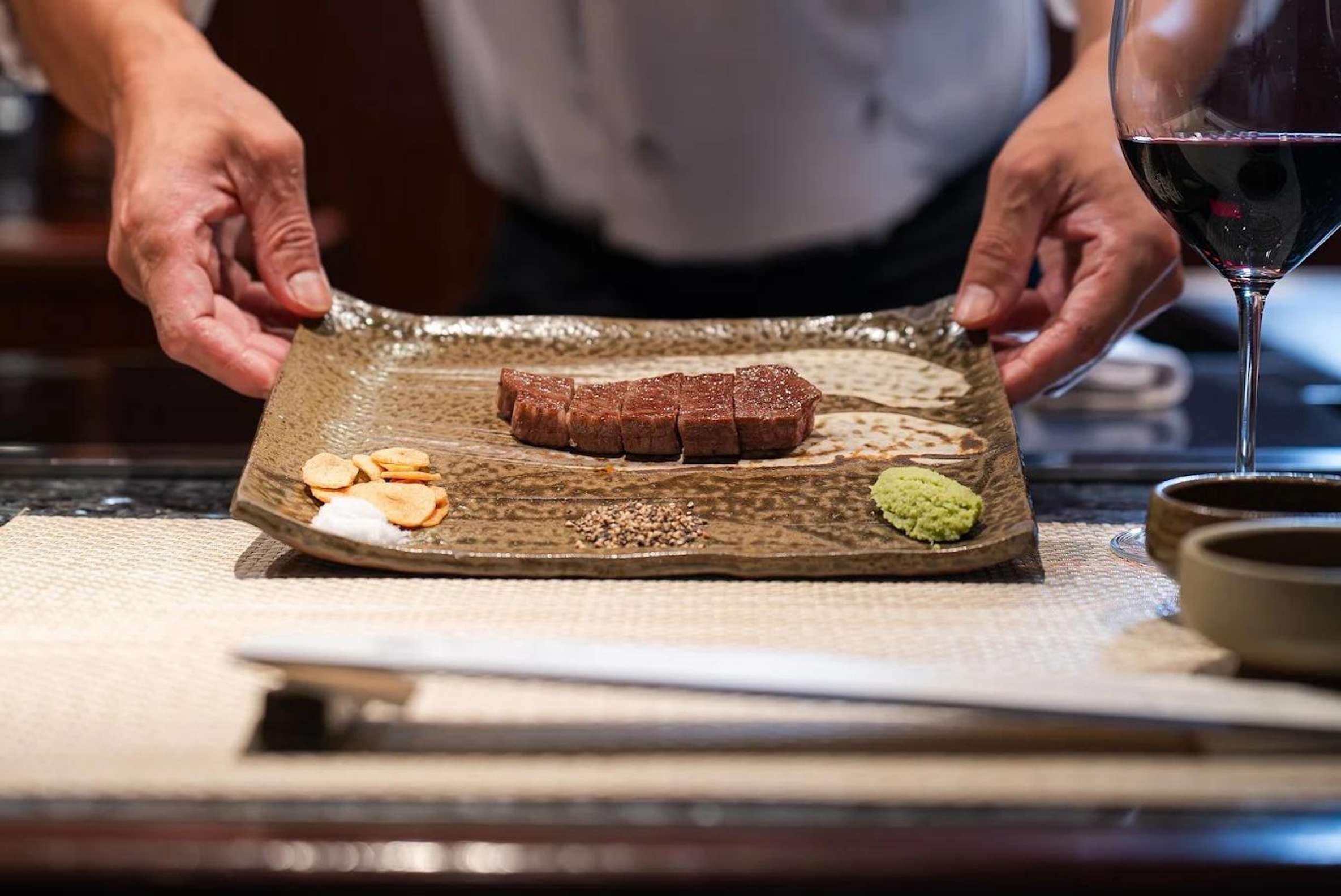
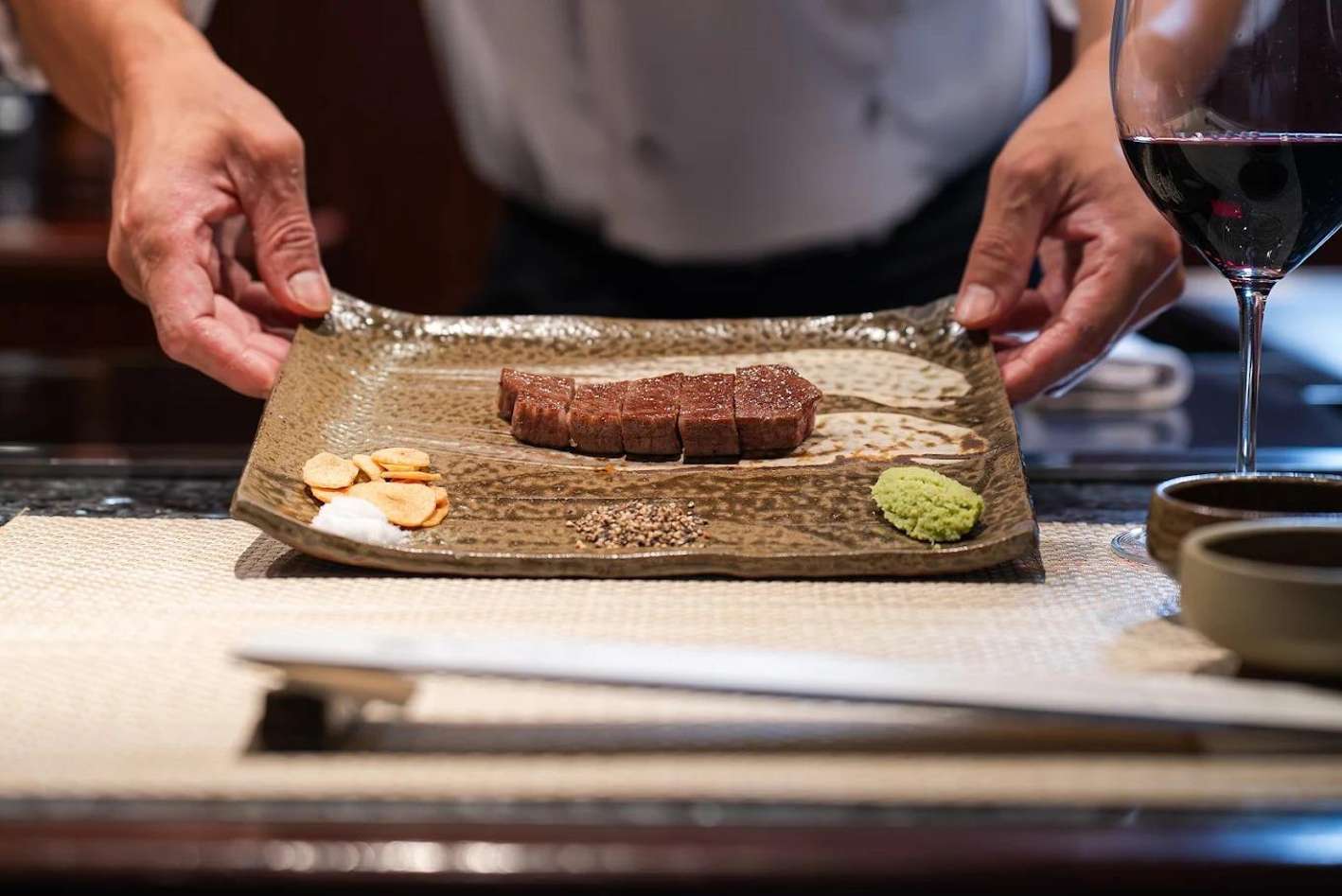
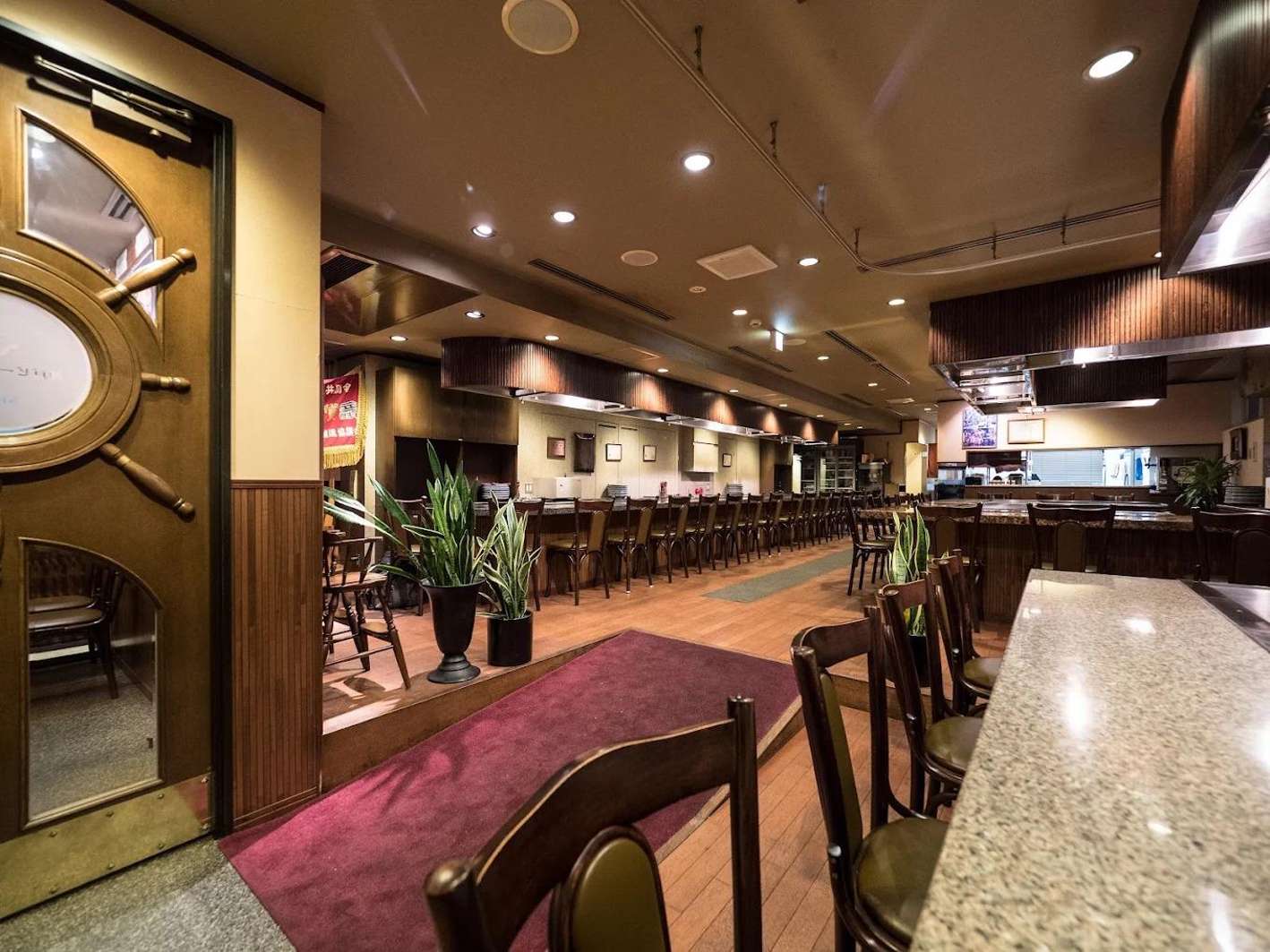
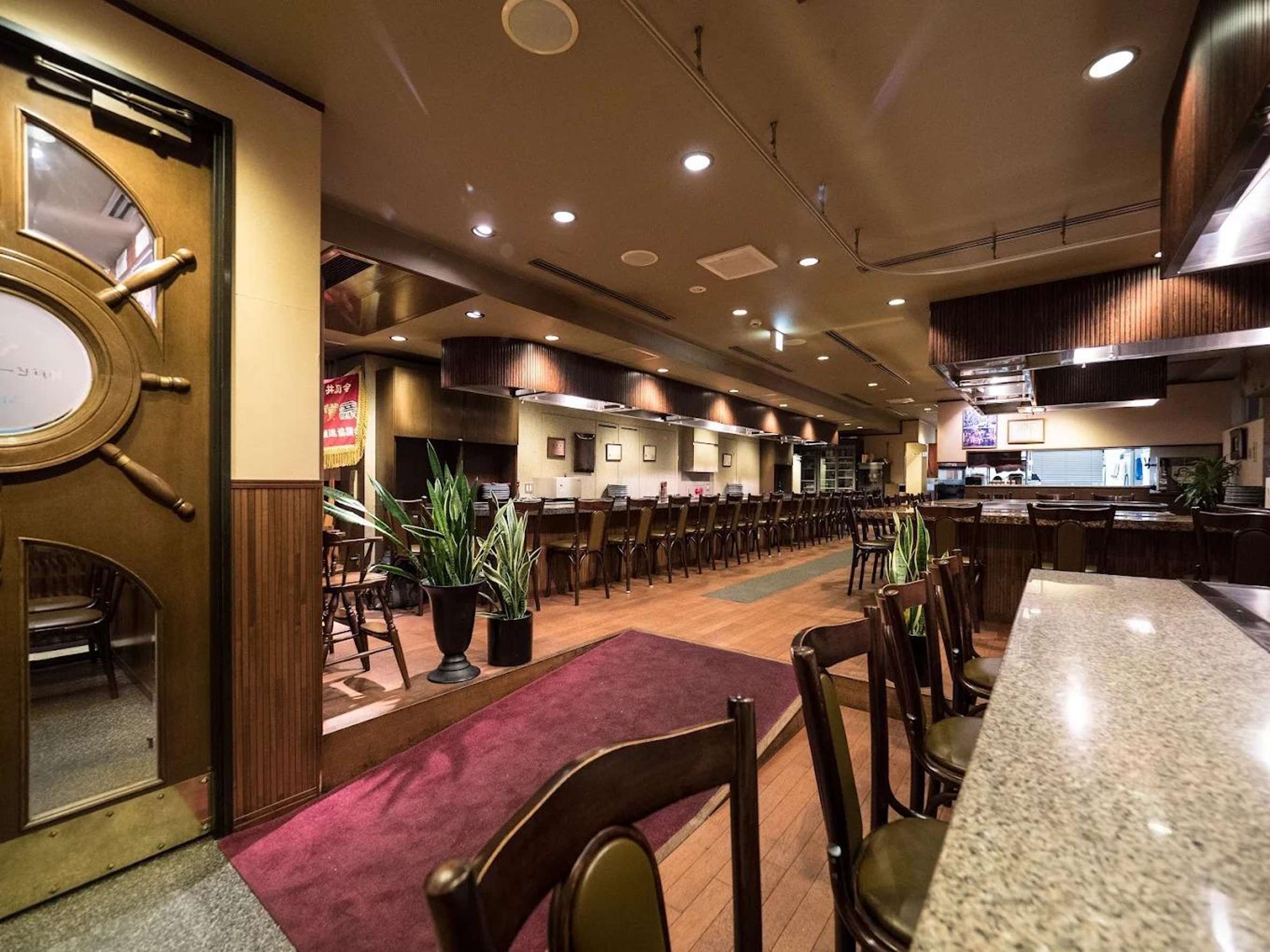
The chef works the iron griddle a meter from your seat, searing slices with nothing but salt and wasabi beside him. This is teppanyaki, and for first-timers it is the purest way to taste high-grade beef, because the meat hits the plate with minimal sauce and all that low-melting fat renders straight into the fibers.
Order it medium-rare. Rare leaves the abundant intramuscular fat unrendered and chewy; medium-rare lets the unsaturated fats dissolve into the meat and brings out the natural sweetness. Sweet sauces work against the beef here, so resist the urge.
Yakiniku runs the other way. You grill the raw pieces yourself at the table and dip them in sauce, a casual, social meal that is also the natural choice when part of your group eats vegetarian and you want plant-based set options alongside the beef.
Sukiyaki and shabu-shabu are the ones to skip at this price: simmering leaves the rendered fat in the pot and the sweet broth buries the flavor you paid for.
Save room for the finish. At the end of a teppanyaki course the chef fries garlic rice on the same griddle with the beef's rendered fat and juices, so none of that umami goes to waste. It is the part people remember.
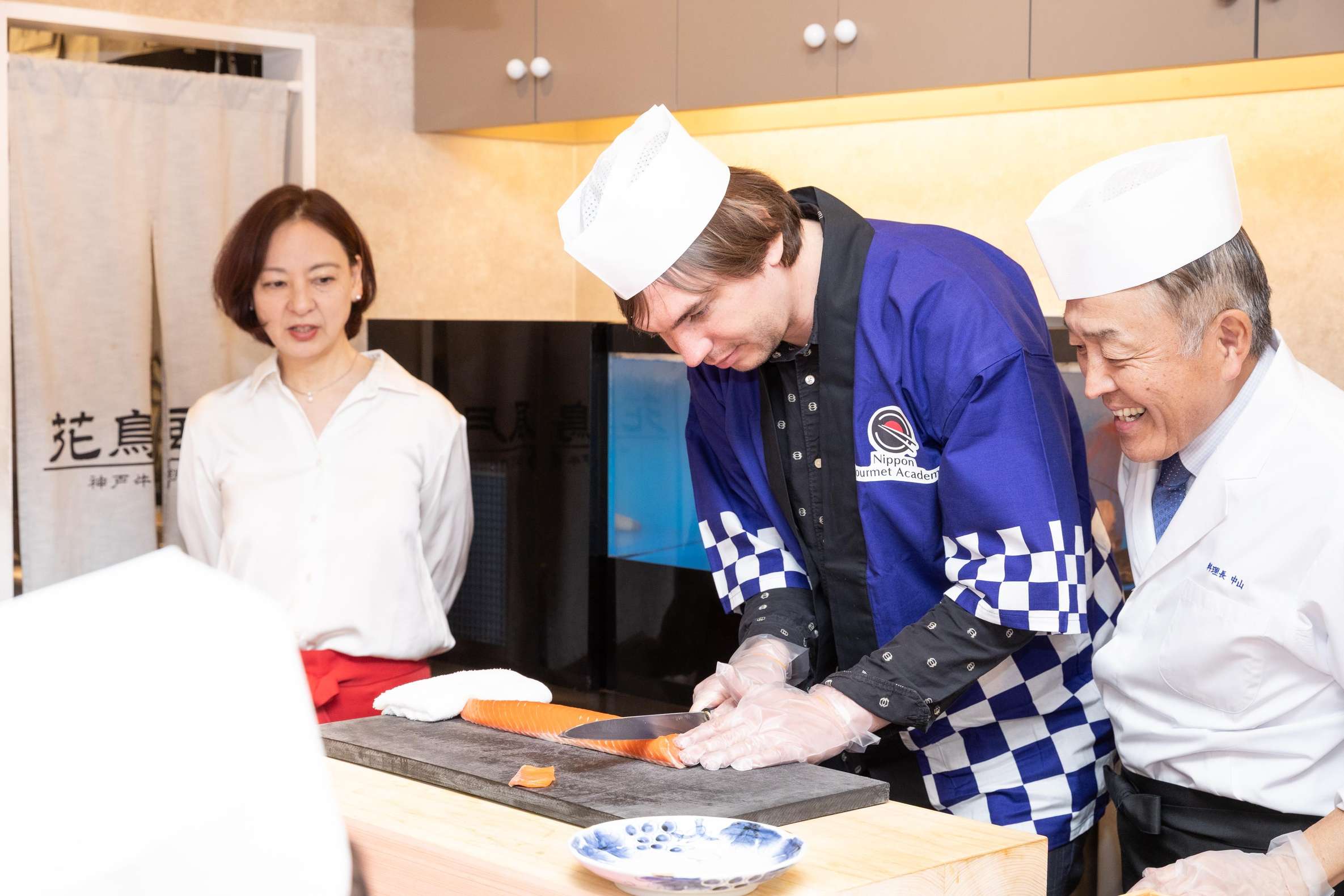
Booking a certified Kobe steakhouse - reservations, dress and etiquette
Going independently works, but the gates catch first-timers one by one. The booking window comes first: top counters open reservations two months ahead, and during cherry blossom and autumn foliage season the established counters book out three to four weeks in advance, sometimes more.
Reservations themselves can trip foreign visitors. When a booking form refuses your country code, use the restaurant's alternative route or ask your hotel concierge, never a false Japanese number, and never the hotel's main line unless the hotel agrees to act as your booking contact.
A few Kobe counters accept same-day phone bookings, and one venue at Kobe Port Tower takes walk-ins entirely.
Dress smart casual and skip the cologne. Shorts, tank tops, sandals and T-shirts are turned away, and any strong scent interferes with the beef's aroma at an intimate counter.
Read the cancellation terms before you book: several counters charge the full meal for a no-show, and late arrivals can lose the table, one restaurant moving other guests into your seat after 15 minutes.
What nobody tells you
Book the moment your dates are fixed, or switch to lunch, which frees seats easily
Arrive well before your slot; a 15 to 30 minute late arrival can cost the table with no reschedule
A thank-you to the chef does the job, and tipping can even be frowned upon
At the counter itself, tell the chef how you want the steak cooked and mention any allergies before cooking starts, wait for the chef to serve each piece, and keep the flash off when you photograph.
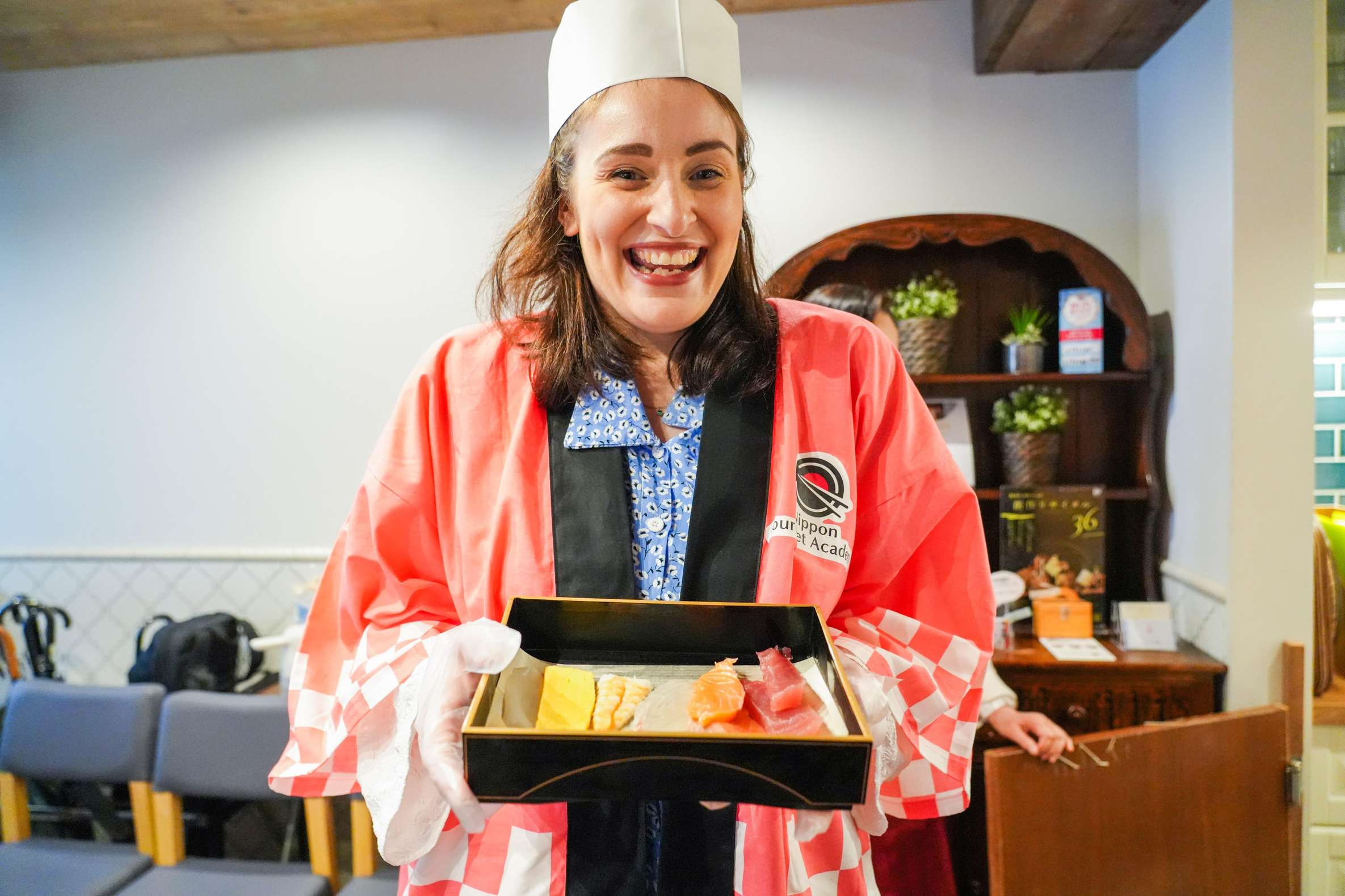
Guaranteed authentic Kobe beef - the guided lunch tour
There is a route that removes every check from the previous chapters at once.
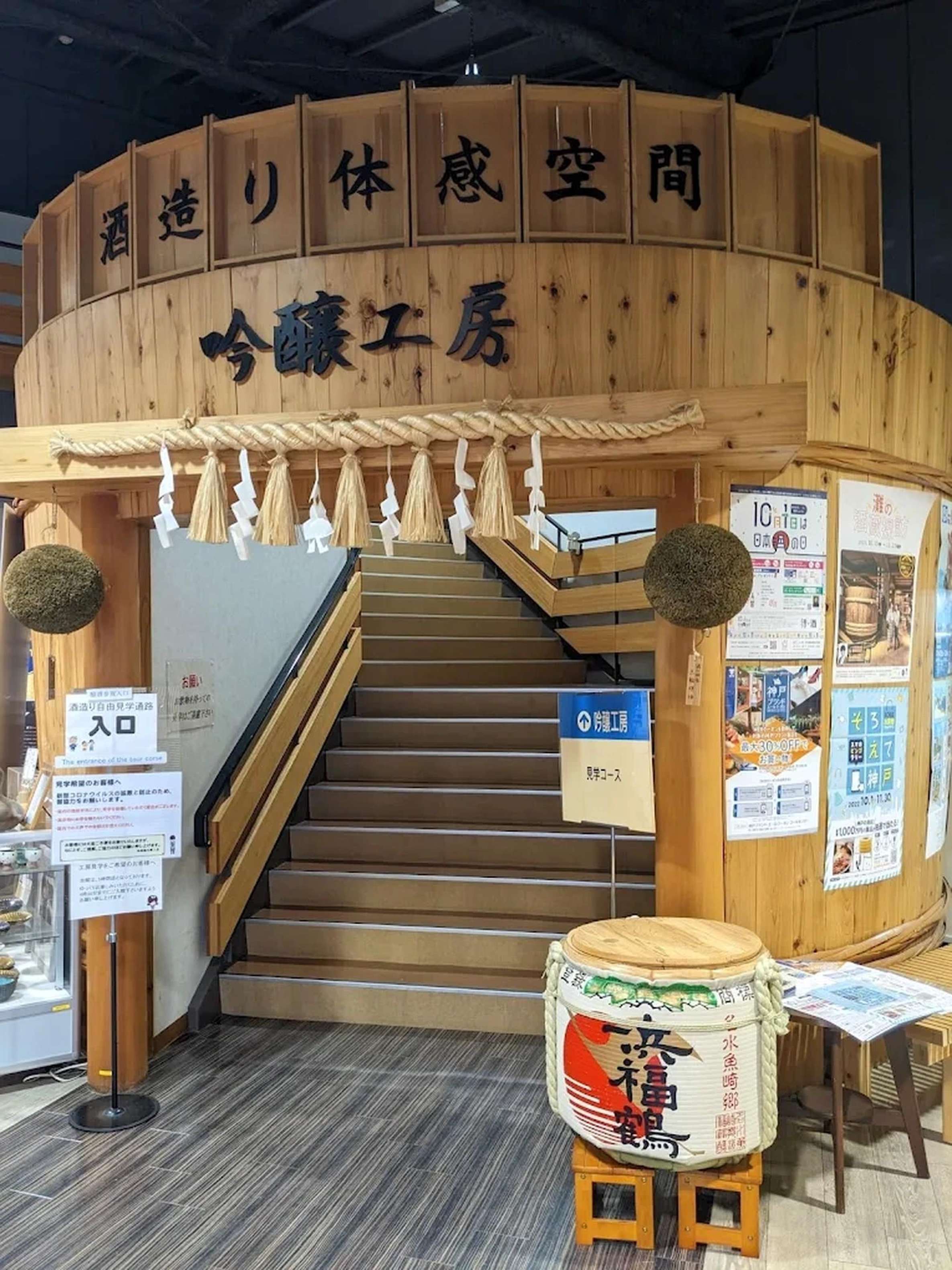
The Kobe: Certified Kobe Beef Lunch and Nada Sake Brewery Tour starts near JR Sannomiya Station and walks you into a registered steakhouse, where a 120 g certified Kobe Beef steak lunch comes with the guide explaining Tajima lineage, grading and tracing at the table, before the first bite.
You learn why A5 alone does not mean Kobe, and why Kobe-style menus usually are not the real thing.
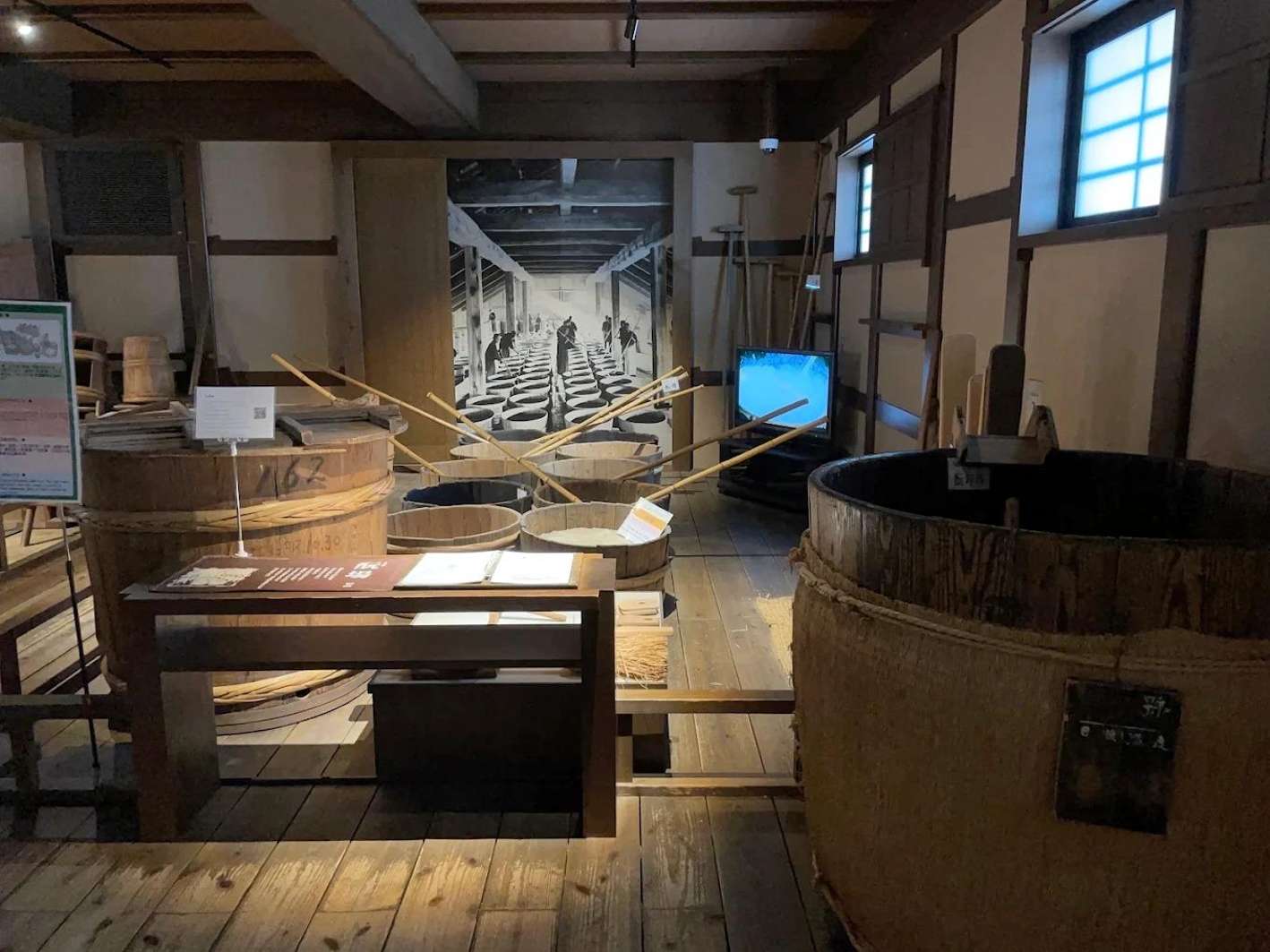
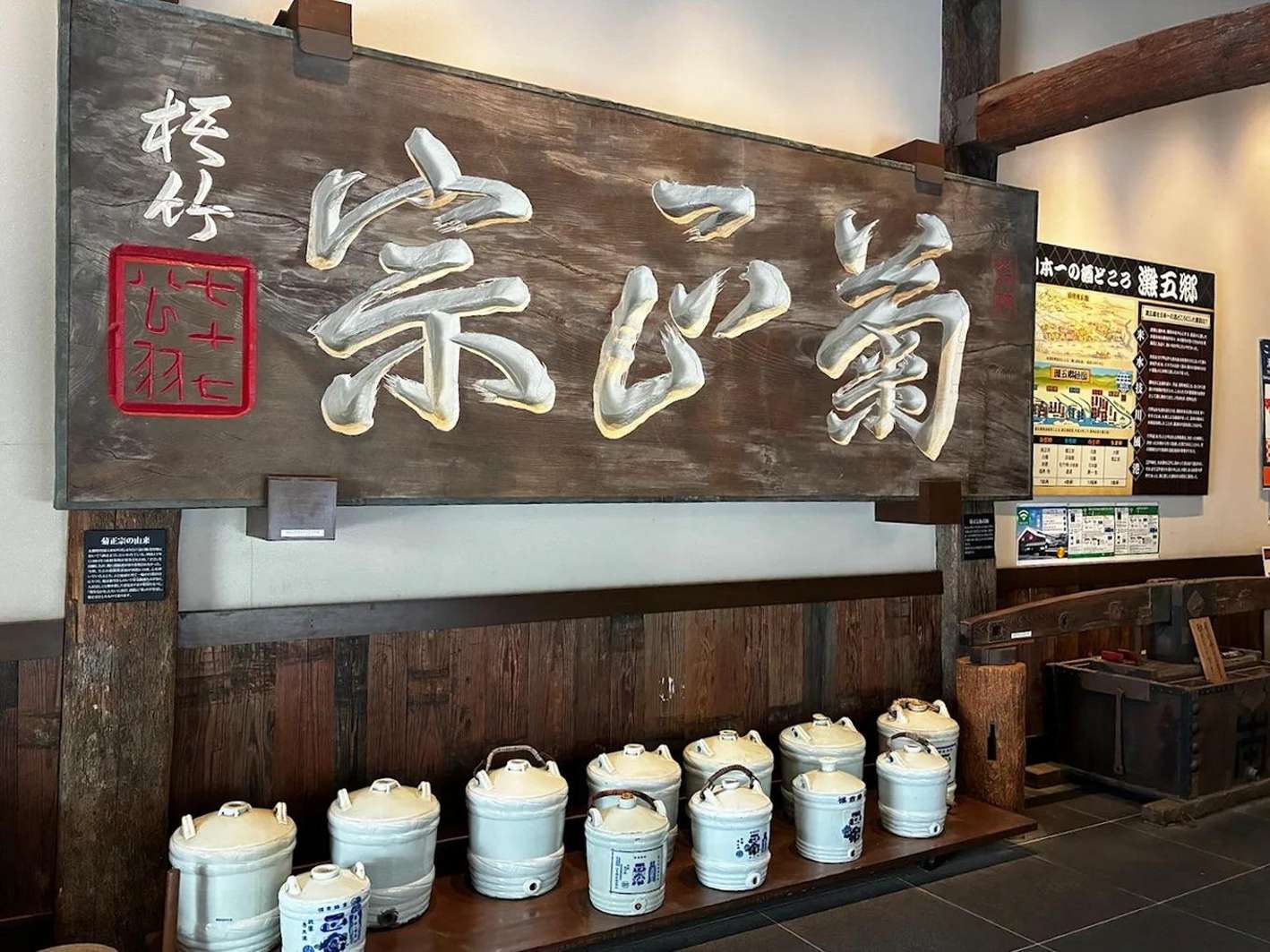
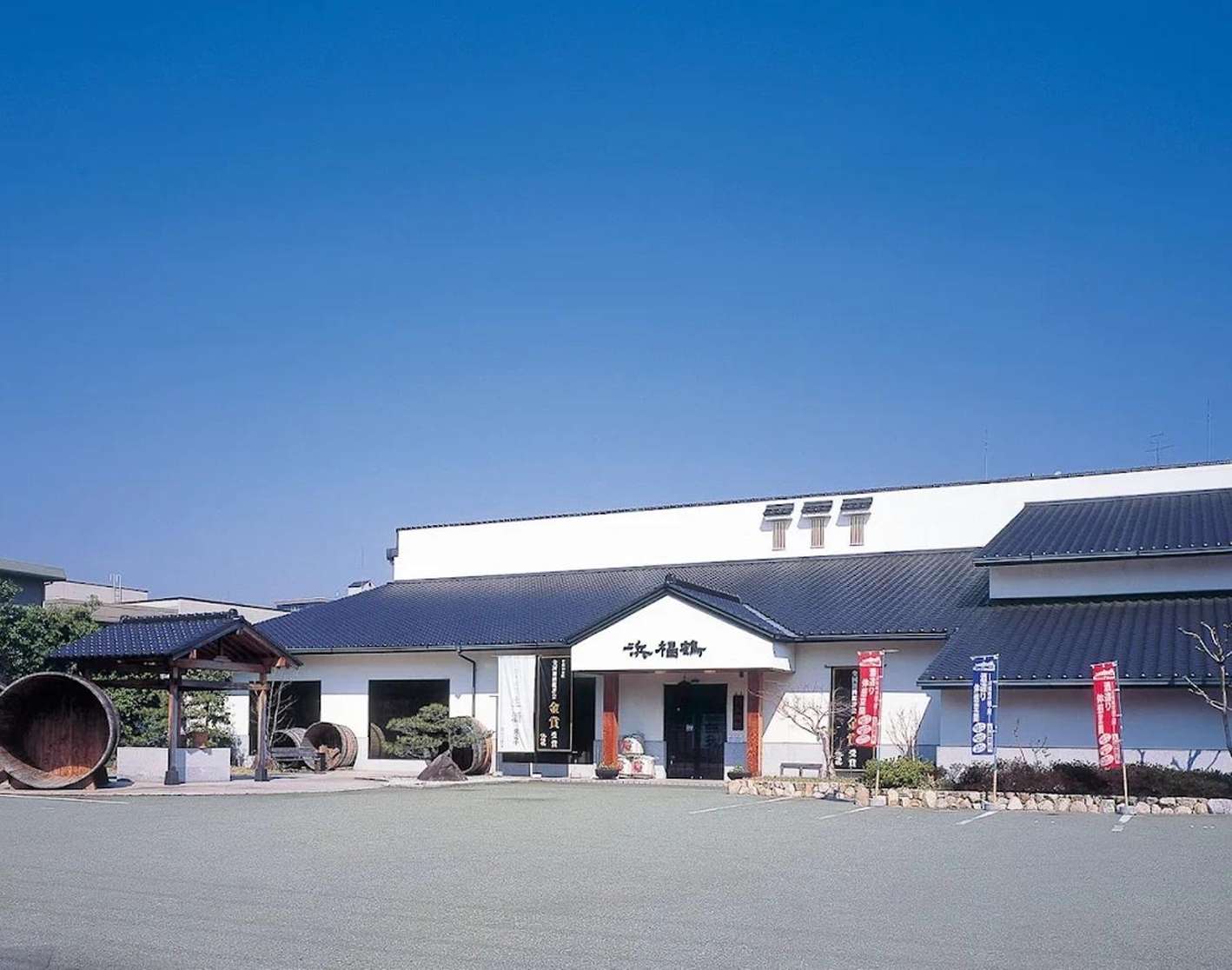
The afternoon moves by local train into the Nada district, Japan's most famous sake-producing area, for three brewery museums and tastings for those 20 and over.
Younger guests get a non-alcoholic treat, and live brewing is watched through glass at one working brewery. The whole run takes 5.5 hours with about 4 km of walking on flat streets.
Superb from start to finish. Learned sushi-making with a chef, ate it, plus delicious Kobe beef shabu-shabu. Just us two, special, intimate, and a rich cultural exchange.
The terms are forgiving. Cancel up to 24 hours ahead for a full refund, arrive ten minutes early, and flag allergies at booking, since the lunch cannot be switched to vegetarian. Getting there is easy from either direction: the JR Special Rapid runs direct to Sannomiya in 21 minutes from Osaka and 52 from Kyoto.
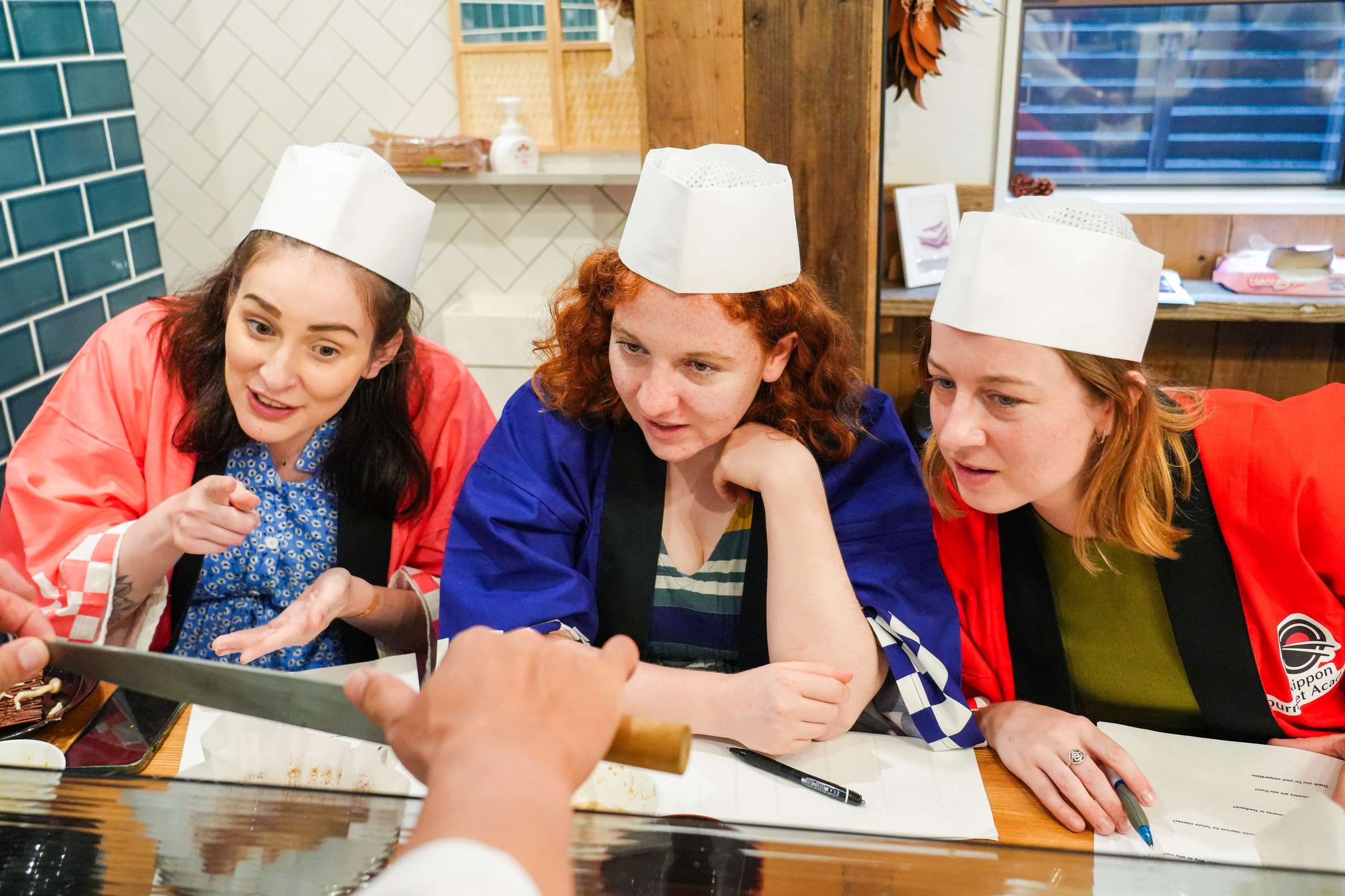
Eating Kobe beef in Kobe, and what else to do around the meal
The last doubt is whether the beef must be eaten in Kobe itself. Strictly, no. Certification is identical everywhere, and designated restaurants serve genuine Kobe beef in Tokyo and Osaka too, so nobody needs to change hotels for a steak.
What Kobe gives you is selection. The blocks around Sannomiya Station hold most of the authenticated teppanyaki restaurants, and Kitano carries the densest cluster of established high-end counters. The beef tastes the same at either address, but the story you take home is better told from inside Hyogo.
Around the meal, a full day builds easily. The Nada brewery district sits a short local train ride east, and linking the three main museums on foot takes about 2 km and 23 minutes.
Standard tastings there are usually free, with paid pours from a token machine at one museum. Between October and March the working breweries smell of fermenting mash and fresh rice, and from December green cedar balls at the entrances announce newly pressed raw sake.
Nankinmachi Chinatown and the harbor fill the rest. If you are already based near top steakhouses in Osaka or Tokyo, a day trip of 30 to 45 minutes each way covers it; the beef is the same, the day around it is not.
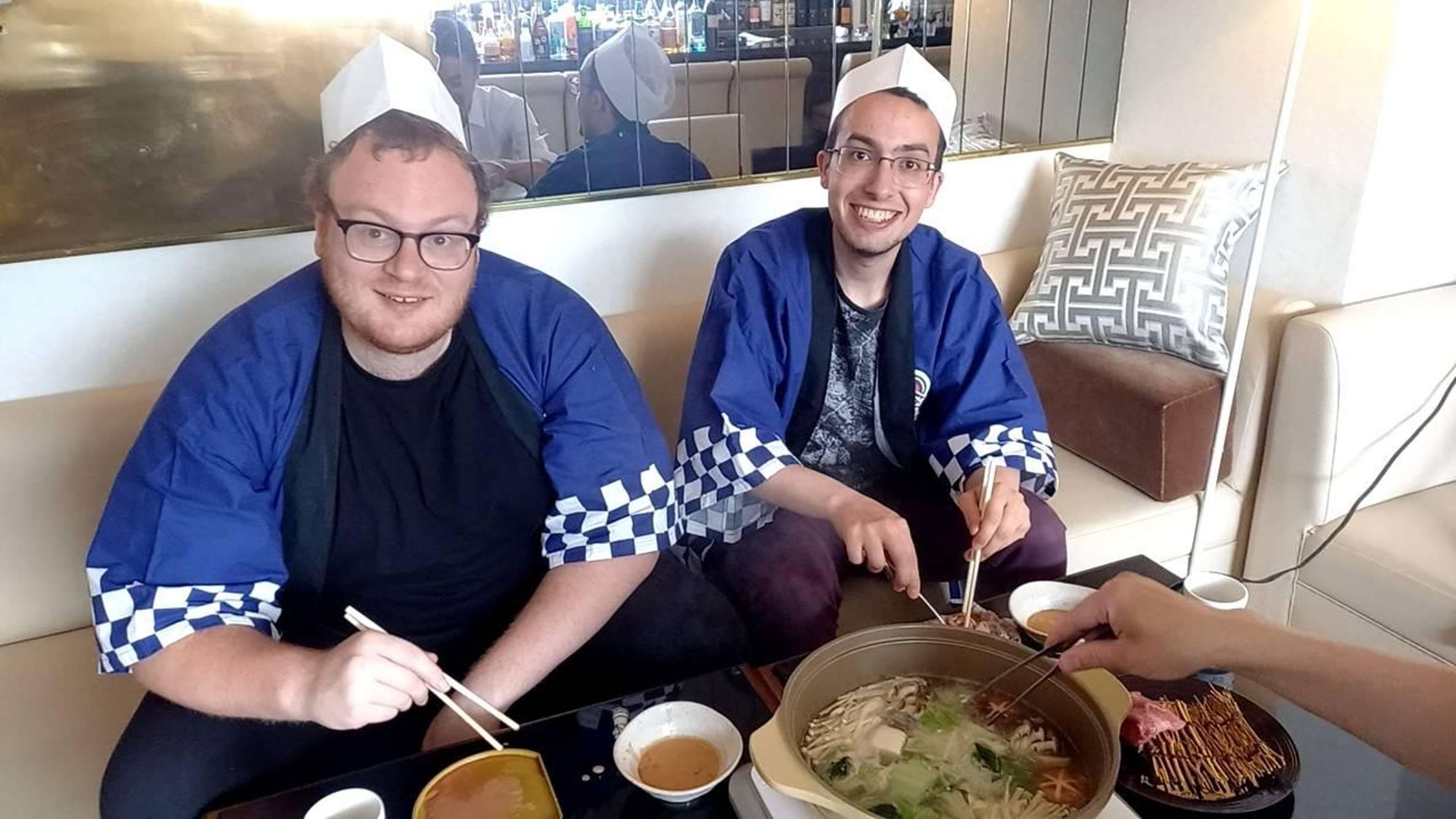
Not the same, and worth the difference
Kobe beef is wagyu, but it is a legally protected tier of one bloodline from one prefecture, and the seal at the door proves it.
The flavor is genuinely softer and quicker to melt, though most diners cannot separate top grades by taste alone. Book a certified lunch, verify the bronze statuette, and the premium pays for exactly what it claims.
What to know before you book a same wagyu Kobe beef lunch
Look for the small bronze statuette and registration certificate at the shop front. Under Japan's traceability rules, the beef's 10-digit ID number must also appear on the menu or somewhere visible in the room.
That 10-digit number traces the animal itself. It shows the lineage, where the cattle were born and raised, the market of sale, and whether the meat is certified Tajima-gyu Kobe beef.
Certified carcasses carry a chrysanthemum stamp, chosen because it is Hyogo's prefectural flower, applied in four places along with an official certificate of authenticity. Guides on a dedicated tour walk you through these marks before you eat.
Teppanyaki gives a first-timer the purest taste, since a chef sears the steak on an iron griddle with minimal sauce. Heavy broths in sukiyaki or shabu-shabu mask the flavor of premium cuts.
Because the marbling is so dense, 100 to 150 grams suits a dedicated steak meal and 50 to 70 grams fits a multi-course menu. Courses of 200 grams or more are meant for sharing.
Simple coarse salt and fresh wasabi cut through the rich fat better than sweet sauces. Ask for them before reaching for the bottled steak sauce.
High-end teppanyaki counters require advance reservations, and compact rooms with limited counter seating make them necessary for groups. Book your table or tour before you arrive in Kobe.
Arrive on time. Several established steakhouses cancel your reservation if you run more than 15 to 30 minutes late, and one Kobe counter may seat other guests in your place. Tours ask you at the meeting point 10 minutes early.
“Amazing day! Private tour with Take: sake factory visit, train to Kobe, and a phenomenal.”
Kobe Beef same as wagyu? FAQ answers
Is Kobe beef the same as wagyu?
Wagyu is the umbrella name for four Japanese cattle breeds: Japanese Black, Brown, Shorthorn, and Polled. Kobe beef is one strictly certified tier of it, coming only from purebred Tajima cattle born, raised, and processed in Hyogo Prefecture.
So all Kobe beef is wagyu, but is all wagyu Kobe beef?
All authentic Kobe beef is wagyu, and most wagyu never earns the Kobe name. Wagyu can be raised anywhere in Japan; Kobe beef carries a legally protected geographical designation tied to Hyogo Prefecture and a pure Tajima bloodline.
Is Kobe beef always A5?
No. Certified Kobe beef needs a meat quality grade of 4 or above, a yield grade of A or B, and a marbling score of at least BMS 6. It can legitimately carry A4, B4, A5, or B5 labels.
Kobe beef vs A5 wagyu: which is better?
They measure different things. A5 demands a marbling score of 8 to 12; Kobe certification demands lineage, origin, and BMS 6 or higher, with grades up to A5. An A4 Kobe steak can compete with an A5 cut from another prefecture.
What does the A5 label actually measure?
The Japanese grading system rates carcasses on a 15-rank grid from C1 to A5. The letter scores usable meat yield, the number scores quality across marbling, color and luster, firmness, and fat quality. The lowest of those four factors sets the final grade.
Why is Kobe beef more expensive than other wagyu?
It accounts for under roughly 0.2% of all beef eaten in Japan, and Tajima cattle take an extra two to four months to raise than standard Japanese Black wagyu. Keeping the bloodline pure under Hyogo's strict rules adds to the cost.
How do I spot real Kobe beef at a restaurant?
Designated restaurants display a small bronze Kobe beef statuette and a registration certificate at the shop front. The chrysanthemum stamp, Hyogo's prefectural flower, marks certified carcasses in four places, and the menu must show the beef's 10-digit tracking ID.
Can beef be labeled Kobe beef in the United States?
Yes, and that is where confusion starts. In Japan, crossbred cattle can never legally be labeled Kobe beef. In the US and some other countries, weak trademark rules let crossbred meat be sold as "Kobe beef" or "Kobe-style beef."
Is American or Australian wagyu graded A5?
Officially, no. A5 grades are issued only to carcasses evaluated in Japan. American wagyu usually falls under USDA grades topped by Prime, and Australia uses a marble score of 0 to 9+, with no published conversion between the systems.
Is Kobe beef worth the hype and the higher price?
The finely marbled fat melts at about 25 degrees Celsius, a touch below general wagyu fat, so the beef literally dissolves on the palate with a mellow, buttery sweetness. Diners who try it on a tour tend to say the tenderness is worth it.
Do I have to travel to Kobe to eat genuine Kobe beef?
Certified Kobe beef is served in Tokyo, Osaka, Kyoto, and abroad, certified identically everywhere. Kobe's advantage is the wider selection of designated restaurants, especially around Sannomiya. Booking a certified Kobe beef lunch tour takes the guesswork out of the menu.
Still torn over the same wagyu question? Three pages worth reading next
If you like spotting the chrysanthemum sealLunch SetsLunch sets in Sannomiya serve the same certified beef as dinner menus, with easier seats and smaller portions.If you like tracing a 10-digit cattle IDTeppanyaki DiningTeppanyaki counters put the certified cut and the chef's griddle right in front of you, grade and all.If you like the BMS 6 versus 8 breakdownSteak RestaurantsThis guide to steak restaurants in Japan sorts Japanese wagyu from western beef, from Tokyo to Kobe.